

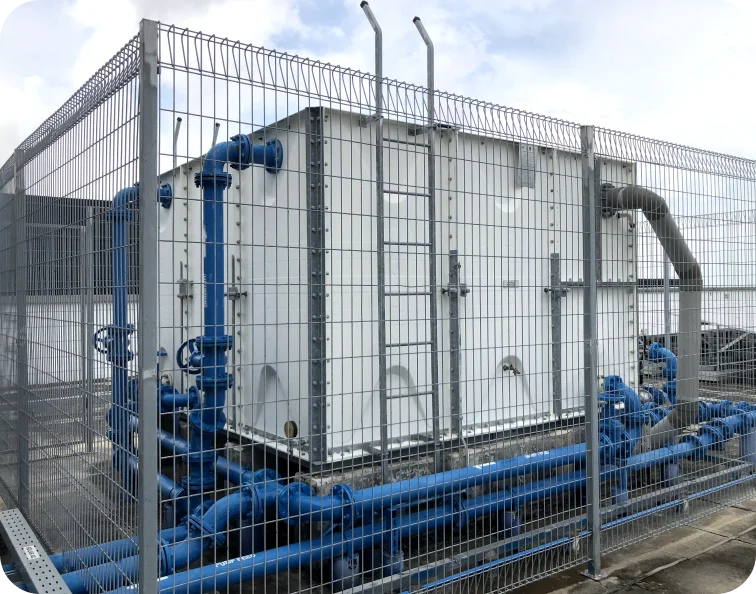
Most people never think about their water tank until something goes wrong — a strange smell, brown water, or a letter from PUB about an overdue inspection. As a licensed plumber, I want to walk you through what water tank cleaning actually involves, why the law requires it, and what to look for whether you're managing a single office floor or an entire building.
Why This Isn't Just Another Maintenance Line Item
If you manage an office, mixed-use building, or F&B premises in Singapore, your water storage tank is the last stop before water reaches every tap, pantry, and washroom your staff and tenants use. Unlike a leaking faucet, a dirty tank doesn't announce itself — sediment, rust, and biofilm build up quietly at the bottom and along the walls, and by the time anyone notices discoloured water or complaints of a strange taste, the tank has usually been overdue for a clean for a while.
For a facility manager, this isn't only a water-quality issue. It's a compliance obligation with legal penalties attached, and it's one of the few building systems where "we'll get to it next quarter" can turn into a fine or a public health complaint with your name on the incident report.
What Singapore Law Actually Requires
This is the part most articles gloss over, so let's be precise. Under PUB's Code of Practice for Water Services (SS636) and the Public Utilities (Water Supply) Regulations, any person responsible for a water service installation with a water storage tank must engage a Licensed Plumber at least once every 12 months to:
- Inspect the tank
- Clean and disinfect it, where necessary
- Certify that it is fit and safe for water storage, free of contamination, and properly maintained with no leakage
As part of certification, water samples are sent to a SINGLAS-accredited laboratory and tested against potable water parameters — colour, turbidity, pH, conductivity, residual chlorine, iron content, total colony count, and E. coli. This isn't a visual check; it's a documented lab result that becomes part of your building's compliance records.
Miss it, and the exposure is real: failure to submit annual certification can result in a fine of up to $10,000, imprisonment of up to 12 months, or both. Landed residential properties with a tank after the sub-meter are exempt from mandatory certification, but that exemption almost never applies to commercial or institutional buildings — if you're managing an office, assume you're covered by the requirement.
In practice, most experienced facility teams don't wait the full 12 months. For commercial and F&B premises with higher water turnover and more people relying on the supply, cleaning every 6 months is the safer, commonly recommended interval — annual is the legal floor, not necessarily the sensible ceiling.
What's Actually Growing in an Uncleaned Tank
I'll keep this simple because you don't need a microbiology lesson, just enough to explain the risk to your management or MCST when they ask why this matters. Over months of normal use, three things accumulate in a water tank:
- Sediment: fine sand, rust particles, and mineral deposits that settle at the base of the tank.
- Biofilm: a slimy layer of bacteria that clings to the tank walls and any exposed surfaces below the waterline.
- Organic contaminants: occasionally introduced through inadequate covers, poor ventilation seals, or pest intrusion.
None of this is usually visible from a quick glance through the manhole cover. The risk isn't dramatic — it's cumulative. Left unchecked, it degrades water quality, encourages bacterial growth (including organisms like Legionella in warm, stagnant conditions), and can eventually corrode the tank itself, shortening its working life.
Signs Your Tank Needs Cleaning Sooner Than Scheduled
Don't wait for the annual reminder if you're seeing any of these — they're worth a call to a licensed plumber regardless of when your last certification was:
- Discoloured, cloudy, or brownish water from taps
- A musty, metallic, or chlorine-heavy smell from the water
- Noticeably reduced water pressure across multiple outlets
- Visible rust or flaking on the tank's exterior or access cover
- Tenant or staff complaints about taste or odour
- It's been more than 6-12 months since the last documented cleaning
What Actually Happens During a Professional Cleaning
Knowing the process helps you brief your operations team, plan the shutdown window, and sanity-check a contractor's quote. A proper job follows this sequence:
- Pre-clean inspection: the plumber checks the tank's structure, cover, ladder, vents, and float valve for damage before starting.
- Isolation and draining: the tank is taken offline and drained. In buildings with sectioned or dual tanks, this can often be staggered so water supply isn't fully cut.
- Sediment and sludge removal: accumulated debris at the base is removed, typically by controlled suction or manual clearing.
- Scrubbing and high-pressure cleaning: interior walls, ceiling, and fittings are scrubbed to break down biofilm, then rinsed under pressure.
- Disinfection: the tank is dosed with a chlorine-based disinfectant at a controlled concentration and contact time to kill remaining bacteria.
- Final rinse and refill: disinfectant residue is flushed out before the tank is refilled and reconnected.
- Water sampling and lab testing: samples go to a SINGLAS-accredited lab for the parameters listed above.
- Certification and report: you receive the compliance certificate and a written report for your records — keep this, as it's what you'll need to show if PUB or an auditor asks.
For a typical commercial tank, expect the on-site work to take anywhere from a few hours to a full day, depending on tank size and access. Larger or harder-to-access tanks (rooftop, basement, multiple units) may need to be split across two visits.
Scheduling Around a Working Building
This is usually the facility manager's real concern, not the cleaning itself. A contractor who's done this for commercial buildings before should be able to:
- Schedule the shutdown after hours, overnight, or over a weekend
- Isolate one tank at a time if your building has more than one, to avoid a full water outage
- Give you a written shutdown window in advance so you can notify tenants
- Coordinate with fire safety requirements if the tank also serves a fire reserve system
If a contractor can't tell you how they'll minimise disruption before you've even asked, that's worth noting.
What It Costs
Pricing depends on tank size, type (overhead, underground, sectional), number of tanks, accessibility, and current condition — a heavily sediment-laden tank takes longer than a well-maintained one. As a general market guide:
- Smaller domestic-scale tanks: typically a few hundred dollars
- Commercial tanks in the 3,000L range: often several hundred dollars
- Larger commercial or fire reserve tanks (5,000-10,000L+): can run over a thousand dollars
Reputable quotes should include pre- and post-cleaning water testing, disinfection, and the compliance report — not just the physical scrub. Treat a quote that's silent on testing and certification as incomplete, since that documentation is the whole point of the exercise from a compliance standpoint.
What to Check Before You Engage a Contractor
A few questions separate a compliant job from one that leaves you exposed if PUB ever asks for records:
- Is the person carrying out the work a PUB Licensed Plumber? Ask for the license number.
- Do they work with a SINGLAS-accredited laboratory for water testing, and will you receive the lab report?
- Will you receive a formal certification document, not just an invoice?
- Do they carry appropriate insurance for work in confined spaces and on rooftops?
- Can they commit to a shutdown window that fits your building's operating hours?
Between Cleanings: What Your Team Can Do
You don't need a plumber on-site to catch problems early. A monthly visual check by your facility team — looking through the access cover for sediment, checking the cover and seals are intact, and noting any change in water clarity or smell at the taps — is enough to flag issues before the next scheduled cleaning.
The Bottom Line for Facility Managers
Water tank cleaning sits at the intersection of tenant wellbeing, legal compliance, and asset upkeep. Treat the annual certification as the legal minimum, keep your documentation on file, and don't wait for a complaint to prompt action. At Santo Engineering, our licensed plumbers handle the full scope — inspection, cleaning, disinfection, lab testing, and certification — and we plan the shutdown around your building's operating hours, not the other way around.
Frequently Asked Questions
How often is water tank cleaning legally required in Singapore?
Under PUB's Code of Practice for Water Services (SS636), any premises with a water storage tank must engage a Licensed Plumber to inspect, and where necessary clean, disinfect, and certify the tank at least once every 12 months. Commercial and F&B premises are commonly advised to clean every 6 months given higher usage and contamination risk. Landed residential properties with a tank installed after the sub-meter are exempt from the mandatory certification, though owners should still clean regularly.
What happens if we skip our water tank's annual cleaning?
Non-compliance with the mandatory certification under SS636 can result in a fine of up to $10,000, imprisonment of up to 12 months, or both. Beyond the legal exposure, an uncleaned tank puts tenants and staff at risk of contaminated water, which becomes a liability and reputational issue for the building owner or facility manager.
How much does water tank cleaning cost in Singapore?
Cost depends on tank size, type, accessibility, and condition. As a general market guide, smaller domestic-scale tanks start from a few hundred dollars, while commercial tanks in the 3,000-10,000 litre range typically run several hundred to over a thousand dollars, including pre- and post-cleaning water testing and a compliance report. Get a site-specific quote for an accurate figure.
Can water tank cleaning be done without shutting down the building's water supply for long?
Yes. Most commercial jobs are scheduled after hours or over a weekend, and buildings with dual or sectioned tanks can often keep partial supply running by isolating one tank at a time. A competent contractor will plan the shutdown window with your operations team before starting.
Who is qualified to clean and certify a water storage tank?
Only a PUB Licensed Plumber can carry out the inspection and issue the certification required under SS636. Water samples must also be tested by a Singapore Accreditation Council (SINGLAS) accredited laboratory. Always ask for the plumber's license number and confirm their lab partner before engaging a contractor.